
Advice From a Caterpillar
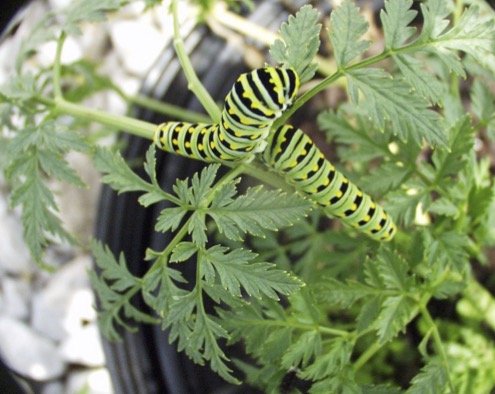
When children tour New York City I suggest stopping to see José de Creeft's marvelous Alice in Wonderland sculpture in Central Park, posing Alice on a large mushroom surrounded by friends. Regrettably missing, perhaps understandably, is the hookah-puffing caterpillar perched on the mushroom in Arthur Rackham's original illustration. Caterpillars' image problem is now happily diminished, and addressing the entomological omission is easy enough planting garden plants attractive to beautiful ones, with the added bonus later of their butterflies (or moths) to follow. Swamp milkweed and butterfly weed are easy flowering perennials that feed monarch caterpillars as well as the adults (and other pollinators too), without being invasive. Interesting milkweed tussock moth and the striking orange and fuzzy unexpected cycnia caterpillars like them as well. (The seed pods are irresistible to some beautiful orange and red plant bugs.) Dill, parsley and fennel are worth growing for the black swallowtail caterpillars (photo) that love them; smallest stages are cleverly disguised as bird droppings before gaining their distinctive stripes. We were delighted to see awesome spicebush swallowtail caterpillars lurking in spicebush last summer; friends tell me they reappear every year. Native blue lupine (L. perennis) is host to painted lady and the endangered Karner blue butterfly caterpillars. Stinging nettle is worth growing for the caterpillars it surprisingly hosts, including red admiral, question mark, banded woolly bear, and Milbert's tortoiseshell. The spiky orange and black Baltimore checkerspot caterpillar loves turtlehead but may dine on yellow foxglove and plantain. There is a wonderland of creatures awaiting an invitation extended simply by thoughtfully choosing what to plant.
Dan Gilrein
Entomologist, Cornell Cooperative Extension of Suffolk CountyDan Gilrein is the Extension Entomologist with Cornell Cooperative Extension of Suffolk County at the Long Island Horticultural Research and Extension Center, Riverhead, NY since 1995 and previously served there as IPM Specialist with Cornell from 1987. In his current position he conducts applied research on control of arthropod pests in food crops and on ornamental plants, provides diagnostic services to the horticultural industries, and conducts educational programs and presentations for industry, government officials, civic groups and the public on pests and pest management.
