
View by Author:
View Blogs:
Flower Power
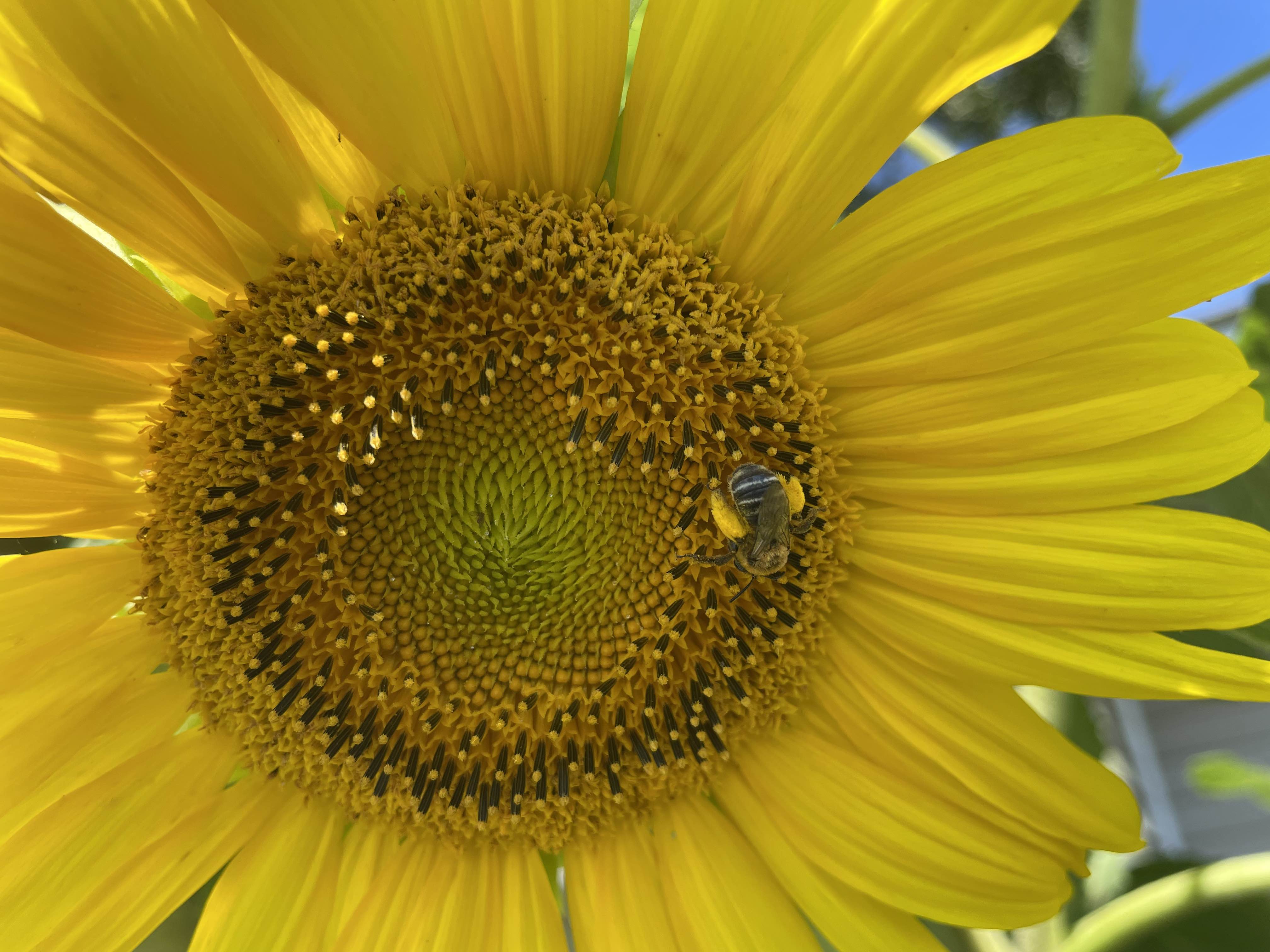
What a great idea - pollenless sunflowers! A recent check of one seed source had dozens of such varieties for cutting. They look great over the Tory Burch tablecloth but entomologists - and bees - sense something is missing. It turns out sunflower pollen is a 'critical' food for some native bees in sunflower's native (North American) range. And despite sunflower pollen being relative low in protein and alone doesn't provide an adequate diet for honey bees and bumblebees, it comes with certain significant health benefits for these pollinators. A 2023 report (Palmer-Young, et al.) of work in 2018-2019 found sunflower pollen 'associated with reduced levels of Varroa mites [a serious and common parasite] in honey bee colonies.' The effect may depend upon the size of the planted area and other landscape-level factors, but the study provides more evidence that bee health may benefit not just from access to pollen and nectar, but also the kinds in their diet. The study cites other cases where bee health benefits from pollen have been reported.
Read more at: https://entomologytoday.org/2023/01/10/sunflowers-reduced-varroa-infestations-honey-bees/
Palmer-Young, E. C. et al. 2023. Sunflower-Associated Reductions in Varroa Mite Infestation of Honey Bee Colonies. J. Econ. Entomol. 116(1)_:68-77.
About the Author:
Dan Gilrein is the Extension Entomologist with Cornell Cooperative Extension of Suffolk County at the Long Island Horticultural Research and Extension Center, Riverhead, NY since 1995 and previously served there as IPM Specialist with Cornell from 1987. In his current position he conducts applied research on control of arthropod pests in food crops and on ornamental plants, provides diagnostic services to the horticultural industries, and conducts educational programs and presentations for industry, government officials, civic groups and the public on pests and pest management.

Dan Gilrein
Entomologist, Cornell Cooperative Extension of Suffolk CountyDan Gilrein is the Extension Entomologist with Cornell Cooperative Extension of Suffolk County at the Long Island Horticultural Research and Extension Center, Riverhead, NY since 1995 and previously served there as IPM Specialist with Cornell from 1987. In his current position he conducts applied research on control of arthropod pests in food crops and on ornamental plants, provides diagnostic services to the horticultural industries, and conducts educational programs and presentations for industry, government officials, civic groups and the public on pests and pest management.